 Get a Quote
 Application guide
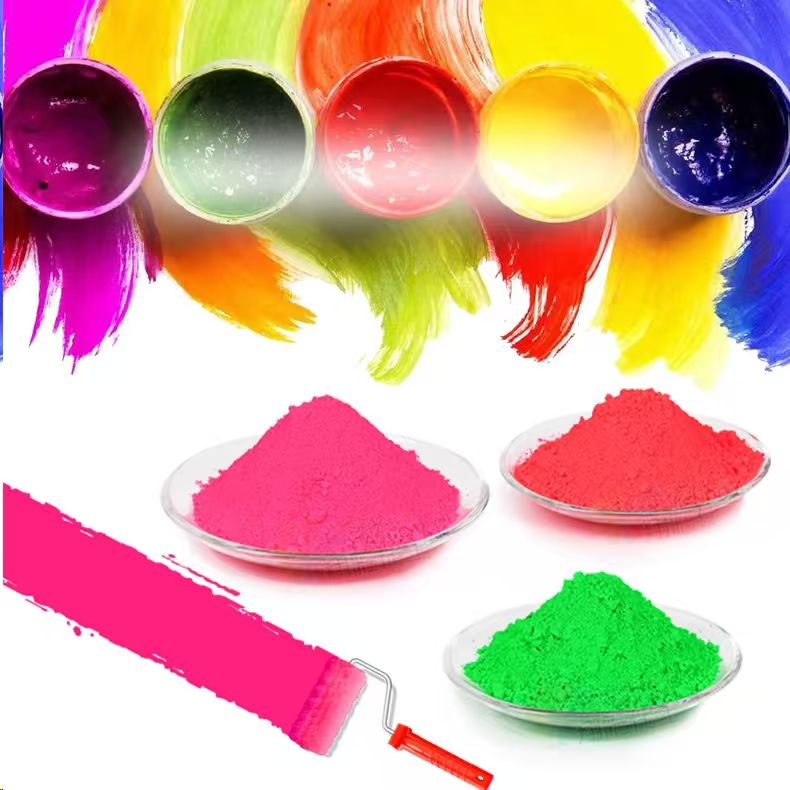
Pigments for Coatings
A practical selection guide for industrial, decorative and effect coating projects.
Where to start
Build the selection around the finished system.
Industrial and decorative coatingsPowder and liquid coating developmentAutomotive-style effect evaluationFloor, resin and specialty finishes
Product selection & starting guidance
Compare every pigment family.
These are formulation-screen starting points, not product specifications. Final loading depends on grade, binder, substrate, process, film build or part geometry. Confirm with representative trials and the final TDS/SDS.
| Product family | Relevant feature | Indicative starting range | How to use / validate |
|---|---|---|---|
| Mica Pearlescent Pigment | Pearlescent, interference and satin effects; particle size affects sparkle and coverage. | 3–8% for an initial effect screen. | Use controlled dispersion; assess platelet orientation on drawdown panels. |
| Photoluminescent Pigment | Long-afterglow options selected by emission colour, particle size and end use. | 15–30% where visible afterglow is required. | Run representative charging and darkness tests; validate film build and substrate colour. |
| Reflective Powder | White and grey grades selected by particle size, refractive index and coating requirement. | 10–25% for an initial reflective-coating screen. | Test dispersion, surface profile and reflectivity in the complete system. |
| Fluorescent Pigment | High-chroma effects with catalogued G/T system options. | 2–8% for a starting colour-strength screen. | Verify solvent, light and application resistance for the selected grade. |
| Metallic Pigment | Gold and copper effects across several particle-size bands. | 5–12% for a decorative-effect screen. | Control mixing and application direction to review the final appearance. |
| Chameleon Pigment | Colour-travel effects commonly evaluated over a dark basecoat. | 2–8% for a starting effect screen. | Use black-base panels and review film build, angle and spray orientation. |
Practical workflow
Move from selection to trial.
- 01Review binder, substrate, opacity and required effect before selecting a grade.
- 02Pre-disperse carefully and avoid excessive shear where platelet orientation matters.
- 03Draw down at the target film build and compare under the intended light and viewing angles.
- 04Confirm weathering, solvent, adhesion and appearance in the finished coating system.
Technical note
Share the variables that affect your result.
For a useful grade recommendation, include substrate, formulation or polymer, application method, target visual effect, processing temperature, expected quantity and destination market.
Next step
Need a pigment plan for your coatings project?
We can help identify an initial product family and route you to the relevant catalogue and technical-document request.