 Get a Quote
 Application guide
Pigments for Printing Inks
Select effect pigment grades for ink systems by printing method, particle size, mesh and target impact.
Where to start
Build the selection around the finished system.
Screen and specialty printing inksPackaging and label decorationDecorative graphic inksSafety and novelty print concepts
Product selection & starting guidance
Compare every pigment family.
These are formulation-screen starting points, not product specifications. Final loading depends on grade, binder, substrate, process, film build or part geometry. Confirm with representative trials and the final TDS/SDS.
| Product family | Relevant feature | Indicative starting range | How to use / validate |
|---|---|---|---|
| Mica Pearlescent Pigment | Pearlescent and interference effects for decorative print finishes. | 5–15% in the finished ink. | Match particle size to mesh and target smoothness; check print transfer. |
| Photoluminescent Pigment | Glow-in-the-dark effects for selected ink and print projects. | 15–30% in the finished ink. | Test print deposit, charge exposure and darkness performance. |
| Reflective Powder | Reflective options for selected marking and specialty ink systems. | 10–25% where the system is compatible. | Validate printability, deposit and reflectivity with the chosen substrate. |
| Fluorescent Pigment | Bright fluorescent shades for high-visibility and decorative inks. | 2–8% in the finished ink. | Confirm particle size, dispersion and resistance in the chosen ink chemistry. |
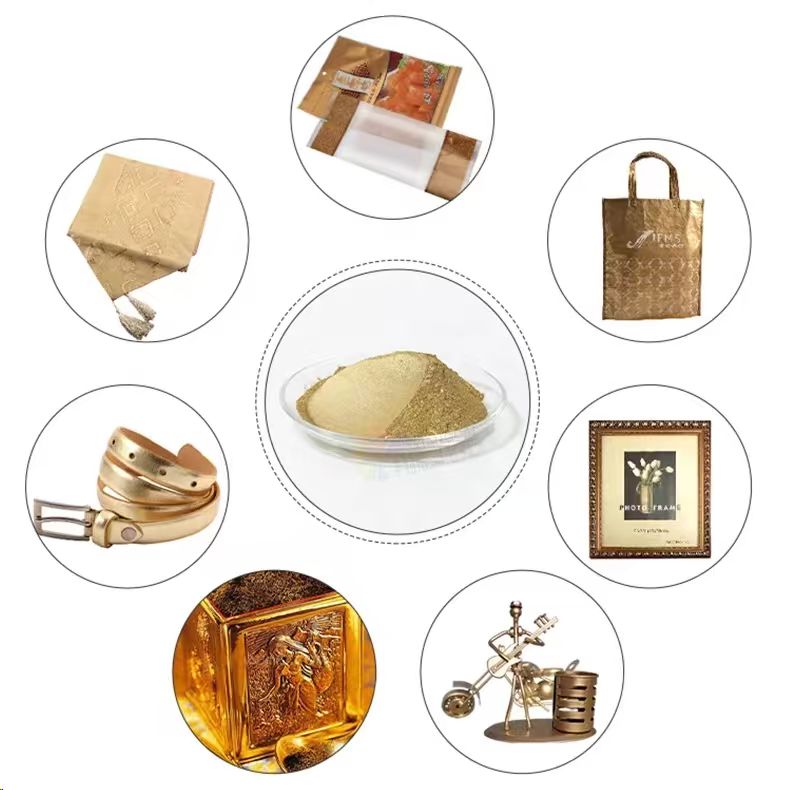
| Metallic Pigment | Gold and copper decorative print effects. | 5–15% in the finished ink. | Review mesh, print deposit, orientation and topcoat interaction. |
| Chameleon Pigment | Colour-travel effects for specialty and decorative ink concepts. | 5–12% in the finished ink. | Use an appropriate particle size and examine colour travel at several angles. |
Practical workflow
Move from selection to trial.
- 01Define print process, mesh/anilox specification, substrate and vehicle.
- 02Select a particle-size band practical for the intended printing route.
- 03Make a short print trial to review dispersion, transfer, rub resistance and visual effect.
- 04Confirm the complete ink, substrate and curing process together before release.
Technical note
Share the variables that affect your result.
For a useful grade recommendation, include substrate, formulation or polymer, application method, target visual effect, processing temperature, expected quantity and destination market.
Next step
Need a pigment plan for your inks project?
We can help identify an initial product family and route you to the relevant catalogue and technical-document request.