
Introduction
Industrial buyers rarely need "a mica powder" in the abstract. They need a repeatable visual effect in a defined coating, plastic, ink, resin, or cosmetic system, supplied in a commercial format that their production team can qualify. That distinction is the foundation of a useful supplier evaluation.
The best starting point is not a catalogue colour name or a marketplace photo. It is a clear application brief, followed by a documented comparison of candidate grades. This guide explains how to review a mica pearlescent pigment manufacturer through the factors that matter after the first sample: performance in the intended substrate, technical documentation, lot consistency, packaging, MOQ, and the way the supplier supports scale-up.
Direct answer
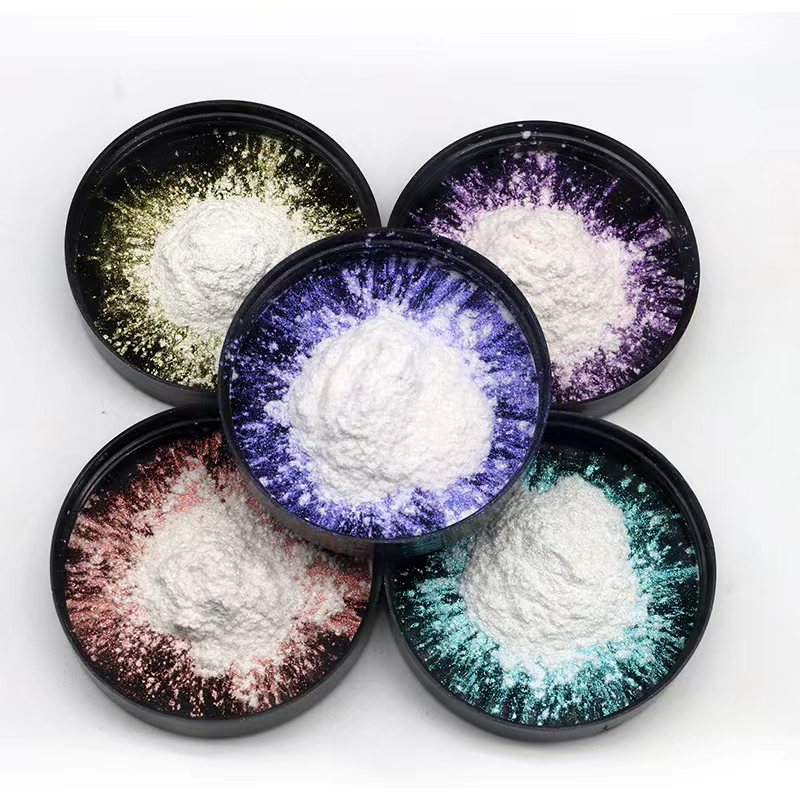
Evaluate a mica pearlescent pigment manufacturer by confirming the grade fits your substrate and required effect, then checking that its TDS/SDS, particle-size information, quality process, packaging, MOQ, and sample workflow support a repeatable purchase. Treat catalogue images as a shortlist tool; make the final decision from application-specific drawdowns and documented commercial terms.
Define Your Application Requirements Before Contacting Suppliers
A productive supplier discussion starts with the use case. "Gold pearl for plastic" is not enough information to choose a grade because the same appearance can behave differently in a solvent-borne coating, a high-temperature polymer, a water-based ink, or a thick cast resin. A manufacturer can make a more relevant recommendation when the buyer provides the variables that influence dispersion, orientation, coverage, and final appearance.
Build a short sourcing brief
Include the following in the first inquiry:
- Substrate and binder: for example, PP, PE, ABS, epoxy, acrylic, polyurethane, nitrocellulose ink, or another system.
- Application method: spray, gravure, screen printing, extrusion, injection moulding, powder coating, or casting.
- Visual target: silver-white, interference, gold, coloured, metallic, colour-shifting, soft satin, or high-sparkle effect.
- Processing conditions: approximate temperature, shear, cure process, and whether the pigment is added in a masterbatch or final formulation.
- Performance limits: opacity, smoothness, weathering exposure, heat exposure, solvent contact, or a restricted formulation requirement where applicable.
- Commercial scope: anticipated annual volume, target package size, destination, and whether you are developing a new product or replacing an approved material.
The goal is not to ask a supplier to guarantee an untested outcome. It is to create a testable starting point. A technical team should be able to explain which details are still unknown and what sample or drawdown is needed to resolve them.
Why particle geometry matters
Mica pearlescent pigments are typically plate-like effect pigments. Their visual result depends on how particles are distributed and oriented in the finished film or matrix. A finer grade may produce a more satin or smooth visual effect, while a coarser grade may show more distinct sparkle. The right balance is application dependent: a coarse grade that looks dramatic on a sprayed panel can be unsuitable for a thin printing ink or a surface where tactile smoothness is important.
Do not use generic labels such as "fine," "medium," and "coarse" as acceptance criteria. Ask for the supplier’s stated particle-size range or grade designation, then compare samples under the lighting and viewing geometry relevant to your product.
Review Technical Documentation as a Qualification Package
Documentation is where a supplier moves from a visual sample provider to a technical sourcing partner. For every candidate grade, ask for the current product-specific documents—not only a general catalogue.
Core documents to request
| Document or record | What it should help you confirm | Buyer action |
|---|---|---|
| Technical Data Sheet (TDS) | Grade identity, stated effect, particle-size information, recommended applications, handling or storage guidance | Check that it names the exact proposed grade |
| Safety Data Sheet (SDS) | Safe handling, transport, storage, and occupational information | Review through your EHS process |
| Certificate of Analysis (COA), if available | Lot-linked release values for relevant parameters | Ask how the lot number connects to delivered bags or drums |
| Sample identification | Material name, grade code, date, and quantity | Retain it as the visual approval reference |
| Regulatory or application declarations, where relevant | Scope of the stated application or market | Confirm applicability with your compliance team |
The quality of documentation is not measured by the number of logos or certificates on a web page. It is measured by whether the information is current, traceable, grade-specific, and consistent with the material that is actually sampled and quoted.
Questions that reveal process maturity
Ask a supplier how it handles a specification revision, a customer colour reference, or a question about a received lot. A credible answer describes a process: material identification, retained samples, review of the formulation and application method, and a documented response. Be cautious when a supplier offers an absolute performance promise without requesting any information about your substrate or process.
Compare Particle Size, Colour Effect, and Substrate Compatibility
Once the documentation is reviewed, compare the technical selection factors side by side. This prevents a common sourcing error: approving a visually attractive pigment before establishing whether it can be processed and reproduced in the intended system.
Practical comparison table
| Selection factor | What to compare | How to verify it |
|---|---|---|
| Particle-size grade | Fineness, sparkle level, coverage, surface feel, printability | Request the stated range and test on your substrate |
| Colour/effect family | Interference, gold, coloured, metallic, synthetic mica, chameleon, or diamond-style effect | Compare drawdowns under controlled and real-use lighting |
| Base material and coating | Material description supplied for the grade | Match against formulation, regulatory, and application needs |
| Substrate compatibility | Resin/binder, ink vehicle, plastic carrier, or cosmetic base | Run a representative dispersion and application trial |
| Processing window | Shear, mixing order, temperature, curing, and film thickness | Ask for guidance, then validate under your own process |
| Appearance control | Batch-to-batch visual alignment to an approved reference | Define an approval panel or retained-sample comparison method |
Sample the formulation, not only the pigment
For industrial coatings, a practical evaluation normally includes a small laboratory drawdown at the expected pigment loading, followed by a review at the film thickness and viewing angle that customers will see. For plastics, the buyer may need a masterbatch or direct-compounding trial that reflects the actual processing temperature and part geometry. For inks, the team should consider print process, transparency, substrate, and drying conditions.
This is where factory testing and customer requirements meet. The supplier can suggest a grade; the buyer’s formulation and process confirm whether that grade is commercially useful. Keep a record of the recipe, substrate, application method, light source, and reviewer observations so the result can be repeated during a later shipment inspection or scale-up discussion.
Validate Quality Control and Batch Consistency
Effect pigments are evaluated visually, but visual control should not be informal. Ask how incoming materials, in-process production, and finished lots are checked for the parameters relevant to the grade. Depending on the material and the supplier’s process, this may include grade identification, particle-size control, moisture-related handling checks, appearance comparison, or a retained-sample system.
What to ask about lot consistency
- How is each production lot identified on internal records, packaging, and shipping documents?
- What approved reference is used when colour or effect is reviewed?
- Is a retained sample available if a buyer reports a visual concern after receipt?
- Which properties are verified before release, and which require application-specific testing by the buyer?
- How does the supplier document a deviation or a change in raw material, process, or grade designation?
The important distinction is between a manufacturer that explains its controls and one that simply claims "consistent quality." A buyer should not assume that all visual differences are pigment defects; film thickness, substrate colour, orientation, dispersion, and lighting can materially change the perceived result. However, a supplier should be able to work through those variables with the buyer instead of dismissing the issue.
Create an approved-reference workflow
Before placing a bulk order, label and retain an approved drawdown or plaque together with the exact grade and test conditions. State whether the approved reference is for appearance direction, a specific formula, or a release criterion. This is especially useful when multiple purchasing, technical, and quality teams are involved in different countries.
Assess MOQ, Packaging, and the Sample Process
Technical fit does not solve a purchasing problem if the grade cannot be supplied in the necessary quantity, package format, and lead time. Commercial questions should be part of qualification, not left until after laboratory approval.
Commercial checks for a first order
- MOQ for the exact grade, including whether it differs for stock versus made-to-order material.
- Standard package format, net weight, liner type, labelling, and palletisation.
- Sample quantity, cost, courier arrangement, and sample lead time.
- Bulk production lead time and the point at which a production slot is confirmed.
- Export packing, shipping documents, destination requirements, and Incoterm discussed with the supplier.
- Change-control or re-order process if the buyer needs the same approved grade later.
For shipment inspection, verify that the grade code, lot information, quantity, package count, and outer labels match the purchase order and any approved packaging specification. If humidity, contamination, or damage is a concern for the product, agree on photo records and package inspection expectations before dispatch.
Use sampling as a structured decision gate
An effective sample process has three stages: define the intended application, test and record the result, then either request alternatives or move to a controlled commercial quote. Avoid treating free samples as an open-ended colour search. A short, documented sample plan makes it easier for a supplier to propose two or three relevant grades and for the buyer to compare them fairly.
Questions to Ask Before Placing a Bulk Order
Use this checklist in a technical or purchasing call:
- Which exact grade is being quoted, and which revision of the TDS/SDS applies?
- What particle-size range and intended application are stated for this grade?
- What supplier data supports the recommended use, and what must we validate ourselves?
- Can you supply a sample identified by grade and lot, and what sample quantity is recommended?
- How should we disperse and apply the pigment for a meaningful trial?
- What are the MOQ, package sizes, estimated lead time, and shipping terms?
- How are lots identified and how are retained samples managed?
- Who will review a technical question after delivery?
FAQ
Is natural mica always the best choice?
No. Material selection should follow the visual target, formulation, application requirements, and any sourcing or compliance criteria set by the buyer. Natural and synthetic mica-based effect pigments can serve different design and process needs. Request grade-specific information rather than assuming one base material is universally better.
Can particle size alone predict the final pearl effect?
No. Particle size is influential but not sufficient. Binder refractive index, pigment loading, film thickness, substrate colour, orientation, and lighting all affect the final appearance. Use particle size to shortlist grades, then verify with your application trial.
Should I ask for a COA with every shipment?
That depends on your purchasing and quality requirements. If you need lot-linked documentation, agree the document format and relevant parameters before ordering. The key is that the paperwork must relate to the exact delivered grade and lot.
What is a sensible sample quantity?
The correct quantity depends on the application and testing method. Ask for enough material to make representative drawdowns, trial parts, or print runs, including repeats. A supplier cannot determine that amount without knowing your formulation and test plan.
Conclusion
The strongest mica pearlescent pigment supplier is not necessarily the supplier with the most catalogue shades. It is the supplier that can connect a defined application requirement to a clearly identified grade, provide usable technical documents, support a repeatable evaluation, and quote a practical commercial route to bulk supply.
CTA: Start a Structured Mica Pigment Review
Share your substrate, binder, required effect, processing method, expected volume, and destination with our technical team. We can help you narrow the mica pearlescent pigment series, request the relevant TDS/SDS, and plan a sample evaluation before a commercial inquiry.