

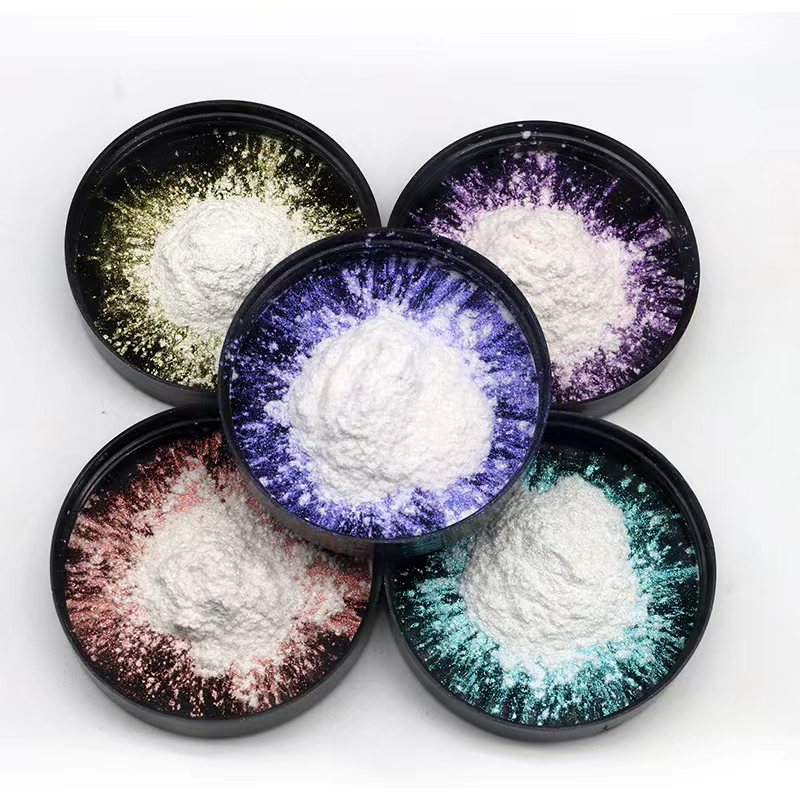
Direct answer
Evaluate a mica pearlescent pigment manufacturer by confirming that its grades fit your substrate and desired effect, technical documents match the proposed material, and its quality controls support repeatable batches. Then verify commercial details—including MOQ, packaging, lead time and sample workflow—before committing to a bulk order.
Define Your Application Requirements
Start with the end-use system rather than a generic colour name. A productive sourcing brief identifies the substrate, binder or carrier, application method, expected processing conditions and visual target. This gives suppliers the information needed to recommend a meaningful starting grade.
Ask to review pigment performance in a representative formulation. A colour card is useful for direction, but it does not replace application testing in your own coating, plastic or ink system.
Review Technical Documentation
Request the catalogue alongside grade-specific TDS and SDS documents. Compare the stated effect, particle-size range, recommended uses, storage instructions and any handling limitations with your project brief. Documentation should be current, traceable and aligned with the product you will sample.
Compare Particle Size, Color Effect and Substrate Compatibility
Particle size affects sparkle, coverage and surface feel; the effect that works on a smooth coating may not translate directly to a textured plastic part or printing process. Use a structured comparison before selecting a candidate grade.
| Selection factor | What to compare | Buyer verification |
|---|---|---|
| Particle size | Effect level, coverage and application method | Request the grade range and test on your substrate |
| Colour effect | Interference, metallic, gold, coloured or chameleon result | Review drawdowns under relevant lighting |
| Substrate compatibility | Binder, resin, ink or cosmetic base system | Confirm with a formulation-specific sample |
| Processing window | Mixing, dispersion and temperature exposure | Ask for handling guidance before scale-up |
Validate Quality Control and Batch Consistency
Ask which incoming, in-process and finished-product checks apply to the grade. For repeat orders, clarify the retained-sample process, lot identification and how a visual or particle-size concern is investigated. The objective is a documented comparison process—not an unverified general quality claim.
Assess MOQ, Packaging and Sample Process
Commercial fit matters as much as the visual effect. Confirm MOQ by grade, package format, sample quantity, sample lead time, bulk lead time and shipping terms. A supplier should be able to explain what happens after a sample evaluation and how the selected grade is carried into a production inquiry.
Questions to Ask Before Placing a Bulk Order
- Which exact grade is being quoted, and which TDS/SDS version applies?
- What sample quantity and test conditions do you recommend for our application?
- How is batch identity recorded on packaging and commercial documents?
- What is the MOQ, package size and estimated lead time for this grade?
- Which buyer-provided formulation details would improve your recommendation?
FAQ
Should I select a pigment from a photo alone?
No. Use imagery and catalogues to narrow candidates, then confirm the grade with a relevant drawdown, technical documentation and a sample evaluation in your application.
What should be included in a sample request?
Include your substrate, product category, desired effect, current formulation constraints and estimated volume. This helps the supplier propose a more relevant grade and test approach.
READY FOR A TECHNICAL REVIEW?